

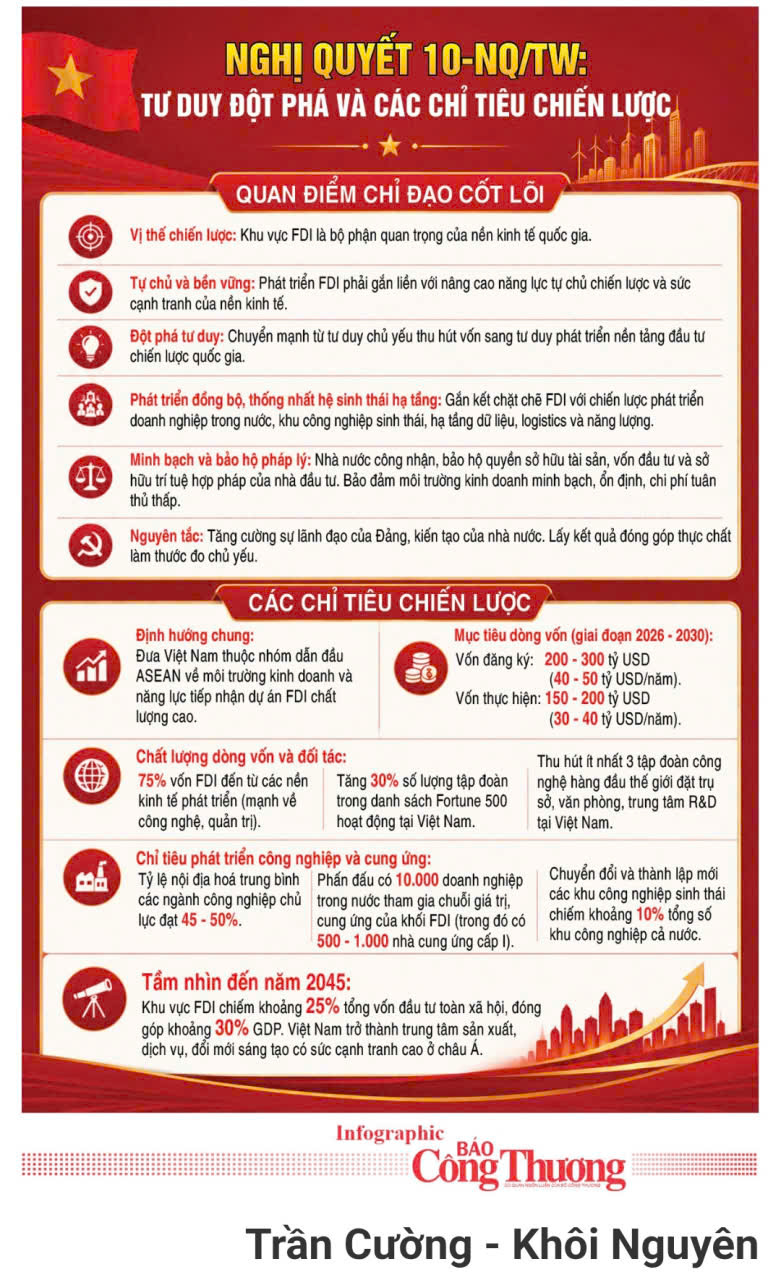
CORE GUIDING PRINCIPLES AND BREAKTHROUGH REFORMS OF RESOLUTION NO.10-NQ/TW
First, shifting from a mindset of attracting foreign investment to developing the foreign-invested economy. The Resolution takes a more comprehensive approach, encompassing direct investment, indirect investment, capital markets, and international financial institutions; considering the foreign-invested economy as an integral component of the national economy, developing harmoniously with the domestic economic sector to serve national development goals.
Second, shifting from the scale of capital to quality, efficiency, and added value. The focus is no longer on attracting more projects, but on selecting projects with advanced technology, innovation, modern management, the ability to spread and make practical contributions to improving productivity and competitiveness of the economy.
Third, shifting from input-based incentives to results-based incentives. Incentive policies are being reformed to link with commitments on technology transfer, research and development, human resource training, linkages with domestic businesses, green transformation, and sustainable development.
Fourth, the shifting from developing individual FDI to developing a synchronized ecosystem of international capital flows. This is a new point of the Resolution, placing direct investment, indirect investment, capital markets, international financial centers, and new development spaces (such as free trade zones, special economic zones, etc.) within a unified whole to improve the efficiency of resource mobilization and allocation.
Fifth, shifting from investment management to creating an investment and development environment. The State focuses on perfecting institutions, improving the quality of national governance, developing infrastructure, human resources and the innovation ecosystem to create a favorable environment for domestic and international resources to develop together.
Sixth, shifting from competition to attract investment among localities to coordinating development at the national level. The Resolution calls for strengthening regional linkages, linkages between the foreign investment sector and the domestic economic sector, promoting the role of growth poles and financial and innovation centers to enhance the overall development efficiency of the economy.
RESULTS OF INVESTMENT ATTRACTION AND ECONOMIC RELATIONS IN THE FIRST SIX MONTHS OF 2026
According to Can Tho city’s socio-economic development report for the first six months of 2026, efforts to support enterprises, attract investment, and develop the private economic sector have been further strengthened. Investment promotion activities have been carried out proactively, diversely, and effectively. The City People’s Committee has issued a list of 85 projects calling for investment until 2030 covering industrial infrastructure, energy, urban development, trade and services, education and transportation, aiming to strongly attract social resources for development. In the first half of 2026, Cần Thơ attracted 06 domestic investment projects with total registered capital of 3,491.6 billion VND, and 01 FDI project with registered capital exceeding 201,000 USD. To date, the city has a cumulative total of 302 non-budget investment projects with total registered capital of approximately 264,160 billion VND and 123 active FDI projects with a total registered capital of over 7.1 billion USD.
Industrial parks infrastructure development and investment attraction have continued to yield positive results, contributing to expand the city’s industrial production capacity. In the same period, industrial parks attracted 04 new projects with total registered capital of approximately 7,313 billion VND, and issued 17 adjusted investment certificates for 17 projects. Cumulatively, industrial parks attract 349 active projects, including 142,133 billion VND in domestic investment and 4,661 million USD in FDI. Disbursed capital has reached 92,478 billion VND (65.06% of domestic investment) and 1,198 million USD (25.7% of FDI).
In terms of external relations, the city hosted 421 international delegations for working session with 2,854 foreign visitors, representing increases of 118 delegations and 1,075 visitors compared to the same period in 2025; Additionally, 34 international conferences and seminars have been approved to organize in the city. International cooperation has continued to expand. The city signed 03 MoUs with foreign partners, including: MoU with Busan Metropolitan City (South Korea), MoU between Department of Home Affairs and Cheorwon County of Gangwon Province (South Korea) on seasonal labor exchange, MoU between Department of Construction and Pacific Construction Group. The city also contributed to organize “4th Urban Mekong Corridor Initiative Dialogue” (4th UMCI Dialogue); Support and coordinate the reception of international assistance to serve social welfare programs within the locality.
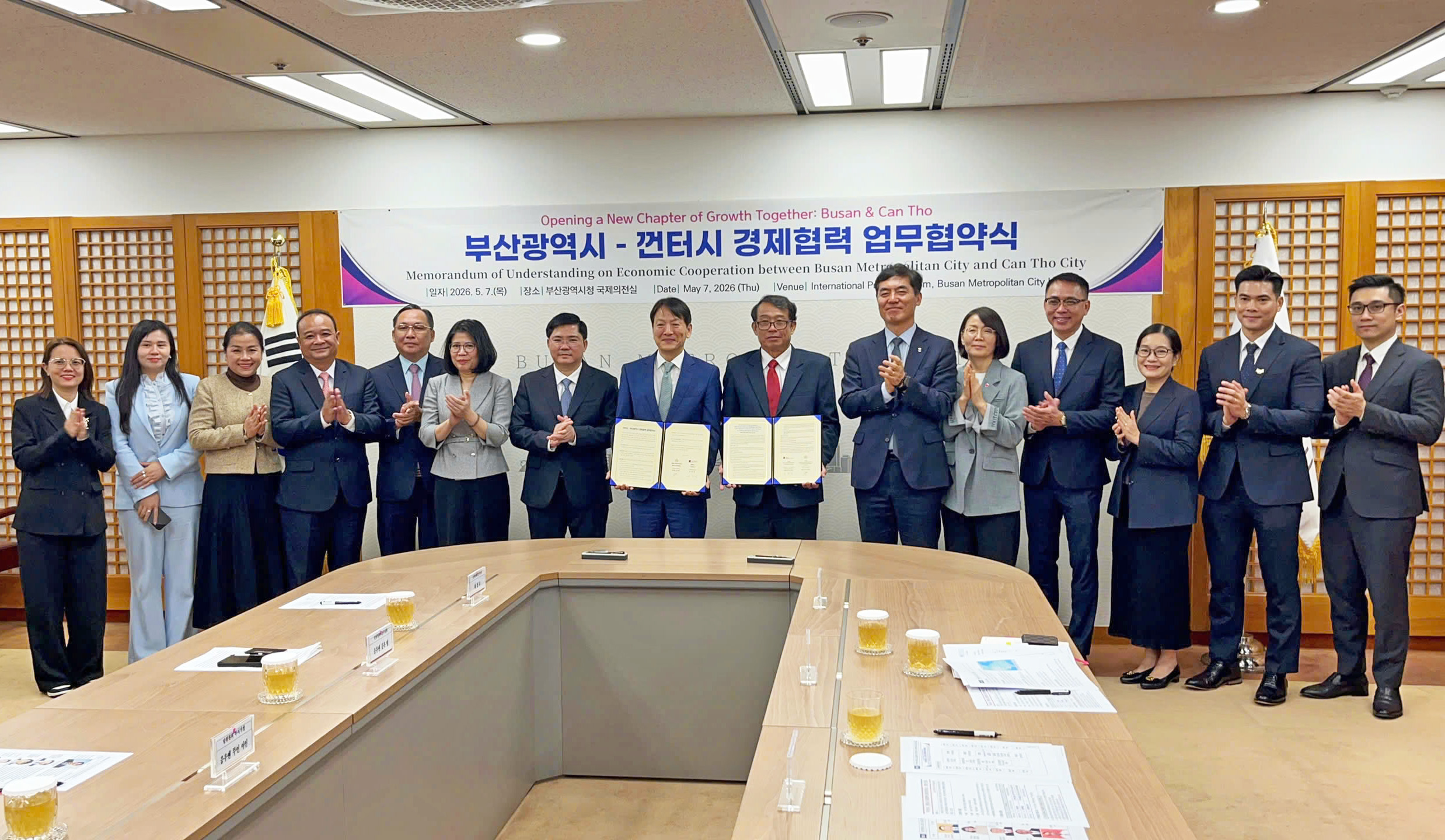
Can Tho city and Busan city sign a MoU on cooperation
INNOVATING AND ENHANCING INVESTMENT PROMOTION EFFECTIVENESS
Based on local realities and the core principles of Politburo Resolution No.10-NQ/TW on the development of the foreign-invested sector, Can Tho Promotion Agency sets out the following orientation: Developing the city’s investment promotion program in a focused and targeted manner basing on with specific partners, sectors and fields. Investment promotion activities will shift from a broad-based approach to a more in-depth focus, prioritizing project quality, efficiency, technological content, and value-added as the foremost criteria. Priority is given to projects that links to domestic businesses, involves in the value chain, and promote sustainable development. Promotion activities are implemented through a model combining investment, trade, tourism promotion and external economic both domestically and internationally; Implementing on-site investment promotion activities, proactively shifting the mindset from “solving procedures” to “partnering in project creation”.
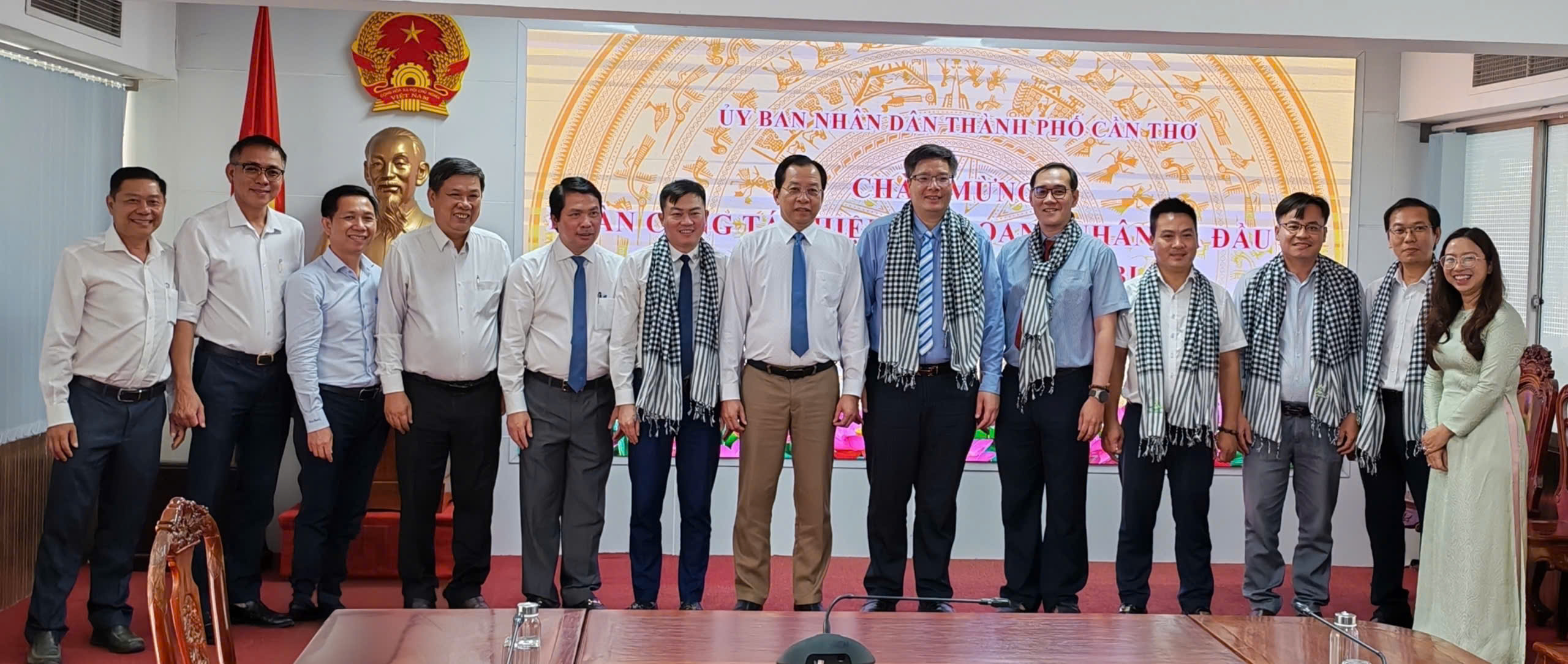
Can Tho city leaders held a meeting with Vietnam – Korea Businessmen and Investment Association (VKBIA)
Orientations for investment promotion in the coming period:
– Seeking partners to promote investment with a focus on key areas that align with the potential and strengths of Can Tho City. Intensify promotion in strategic markets (Japan, South Korea, EU), while expanding into potential markets (India and the Middle East); strengthening cooperation with international promotion organizations such as JETRO, KOTRA, EuroCham, AmCham.
– Orientations toward developing the digital economy and green economy, promoting innovation and digital transformation, and strongly applying science and technology are strategic choices to drive long-term growth and enhance national competitiveness.
– Creating connections and effects between the FDI sector and the domestic economy sector in order to promote the development of the private sector as the most important driving force for development, participating deeply and effectively in the global value chain; to promote the contribution of FDI to socio-economic development, and realize the “Two-digit growth target” in the period 2026-2030.
– Aligned with planning frameworks and socio-economic development strategies, ensuring consistency with policies on administrative boundary adjustments and the two-level local government model.
– Actively integrate and cooperate with domestic and international businesses; expand foreign relations in mobilizing capital, aid from international organizations and non-governmental organizations, and resources from Vietnamese organizations and individuals abroad; organize activities aimed at connecting, attracting, and mobilizing overseas Vietnamese to participate in investment, contribution, construction, and development of Can Tho city in the process of increasingly deep international integration.
– Continue implementing signed international agreements; promote supply-demand connectivity, linking production with distribution and consumption; improve the investment and business environment; and effectively remove difficulties to support businesses, investors, and investment projects in the city.
Kim Ngoc – Translated by Da Uyen